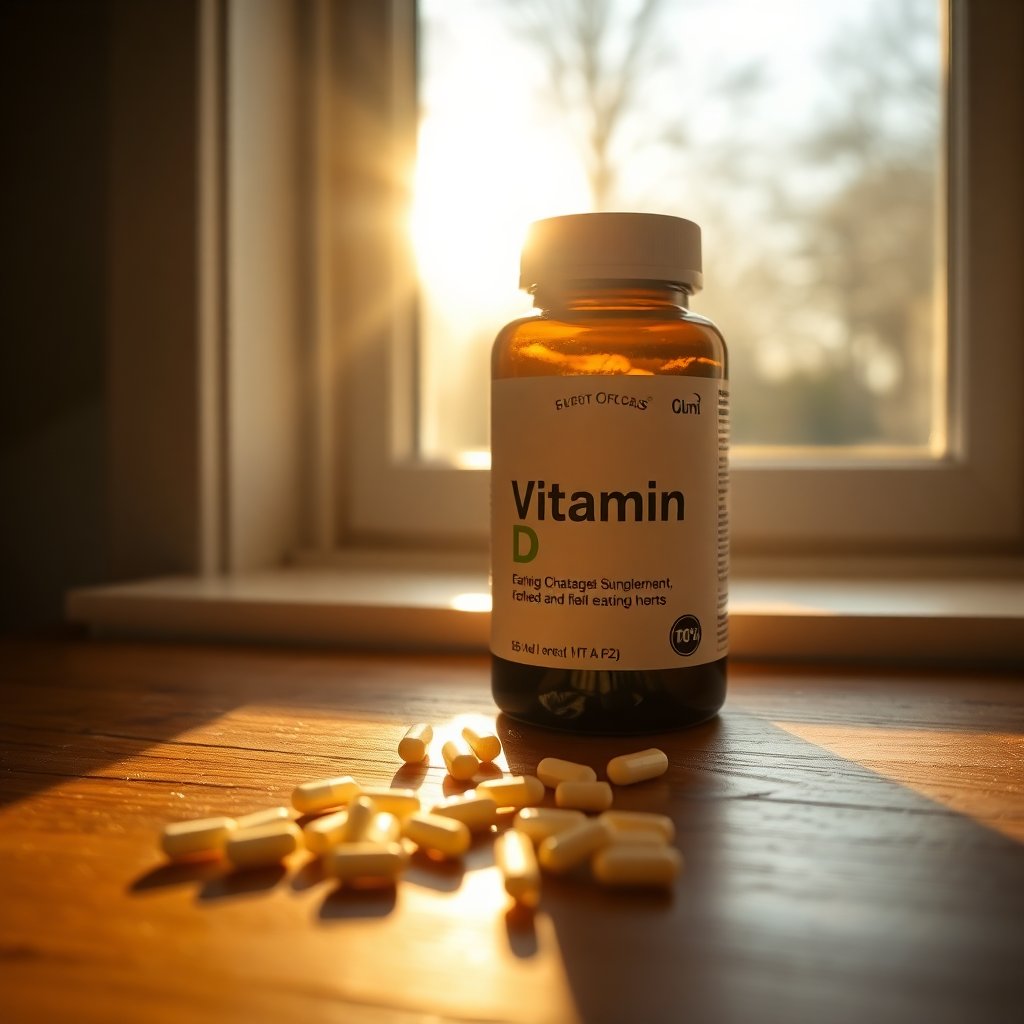
Bone density loss is one of the most significant and least visible consequences of perimenopause. Estrogen plays a major protective role in bone maintenance — as it declines, bone turnover accelerates and density decreases.
Vitamin D isn't a treatment for this. But it's a critical foundation — and most women are deficient.
Why This Matters More Than Most People Realize
Women can lose up to 20% of their bone density in the 5–7 years around menopause. This is the biological basis for the significantly elevated risk of osteoporosis and fractures in postmenopausal women.
Calcium is often highlighted in this context, but calcium absorption depends heavily on Vitamin D. Without adequate Vitamin D, calcium supplementation may provide minimal bone benefit — or worse, accumulate in arteries instead of bone (which is part of why Vitamin K2 matters too).
Vitamin D Deficiency Is Extremely Common
The NIH estimates that over 40% of adults in the United States have insufficient Vitamin D levels. Women in northern latitudes, those who work indoors, and women with darker skin tones are at higher risk.
Symptoms of deficiency are often vague:
- Fatigue
- Bone or muscle pain
- Frequent illness
- Mood changes
Many women attribute these to perimenopause itself, without realizing a Vitamin D deficiency is a contributing factor.
The most important first step: get your 25-hydroxyvitamin D [25(OH)D] level tested. This is a standard blood test. Most clinicians consider below 30 ng/mL deficient and 40–60 ng/mL optimal for bone health.
What the Research Shows
Bone Density
Multiple systematic reviews and meta-analyses have found that Vitamin D supplementation, particularly combined with calcium, reduces fracture risk in older adults — especially those who are deficient. The effect is strongest when D levels are brought from deficient to sufficient, not when supplementing people who are already replete.
A major 2016 meta-analysis in Annals of Internal Medicine found that combined calcium and Vitamin D supplementation reduced hip fracture risk by about 16%.
Bottom line: Evidence for Vitamin D and bone health is strong — the strongest of any supplement in the perimenopause context.
Mood and Cognition
Emerging (not definitive) evidence suggests Vitamin D receptors are present throughout the brain, and deficiency may contribute to depression and cognitive changes. Several observational studies link low D levels with higher rates of depression.
This is not strong enough evidence to treat Vitamin D as an antidepressant — but it's another reason to correct deficiency.
Cardiovascular Health
Cardiovascular disease risk increases significantly after menopause. Some research suggests Vitamin D has cardioprotective effects, though the evidence from clinical trials is mixed. Correcting deficiency remains the priority.
Vitamin D3 vs D2
Always choose Vitamin D3 (cholecalciferol) over D2 (ergocalciferol). D3 is significantly more effective at raising and maintaining blood D levels and is the form produced in skin upon sun exposure.
Why You Need Vitamin K2 Too
This is the part most people miss.
Vitamin D increases calcium absorption. But without adequate Vitamin K2, that calcium may be deposited in arteries rather than directed to bone. Vitamin K2 (specifically the MK-7 form) activates osteocalcin — a protein that binds calcium to bone — and activates Matrix Gla Protein (MGP), which prevents arterial calcification.
For bone health, always take D3 and K2 together.
View Vitamin D3 + K2 combination supplement on Amazon
Dosing Guidance
| 25(OH)D Blood Level | Typical Dose | Notes | |--------------------|----|-------| | Below 20 ng/mL (deficient) | 4,000–5,000 IU/day | Discuss with doctor; may need higher therapeutic dose initially | | 20–30 ng/mL (insufficient) | 2,000–4,000 IU/day | Common maintenance range | | 30–50 ng/mL (adequate) | 1,000–2,000 IU/day | Maintenance; retest in 3–6 months | | Above 60 ng/mL | May not need supplementation | Over-supplementation can cause toxicity |
⚠️ Vitamin D toxicity is rare but possible. Very high doses (10,000+ IU/day for extended periods) can cause hypercalcemia. Always test your levels and work with your doctor on dosing — don't self-prescribe high doses without monitoring.
What About Calcium?
Calcium is important for bone, but the supplementation picture is more complicated:
- Food-first: The safest way to get calcium is from food (dairy, fortified foods, leafy greens, sardines with bones). Your body regulates absorption from food better than from supplements.
- Supplement the gap: If you're consistently below 1,000–1,200mg/day from food, supplement the difference — not the full amount.
- High-dose calcium supplements have risks: Several studies link high-dose calcium supplementation to increased cardiovascular events. This doesn't apply to dietary calcium. Keep supplemental calcium to 500mg per dose maximum for better absorption.
- Take with K2: As above.
The DEXA Scan Conversation
Ask your doctor about a DEXA (dual-energy X-ray absorptiometry) scan. This is the standard test for bone density. Guidelines suggest postmenopausal women over 65 should have one routinely — but women in perimenopause with risk factors (family history, low BMI, smoking, long-term corticosteroid use, early estrogen decline) may benefit from earlier baseline screening.
Knowing your actual bone density status is far more valuable than guessing and supplementing blindly.
Questions for Your Doctor
- Can we check my 25(OH)D (Vitamin D) blood level?
- Based on my level, what dose should I be taking?
- Am I a candidate for a DEXA scan to baseline my bone density?
- Given my history, should I be on a bone-protecting medication like a bisphosphonate?
- Is my current calcium intake (from food and supplements combined) appropriate?
Frequently Asked Questions
Why is Vitamin D important during perimenopause and menopause?
Estrogen plays a direct role in bone density maintenance — as it declines during perimenopause, bone loss accelerates significantly. Women can lose up to 20% of their bone density in the 5–7 years around menopause. Vitamin D is essential for calcium absorption, which is the raw material for bone maintenance. Without adequate Vitamin D, even sufficient calcium intake may not protect bone effectively. Consult your doctor to test your levels and determine appropriate supplementation.
How do I know if I'm deficient in Vitamin D?
The only reliable way to know your Vitamin D status is a 25(OH)D blood test. Deficiency symptoms — fatigue, bone or muscle pain, frequent illness, mood changes — are vague and overlap with many perimenopause symptoms. Over 40% of US adults are estimated to have insufficient levels. Ask your doctor to include this test at your next check-up, especially if you work primarily indoors or live in a northern latitude.
What is the recommended Vitamin D dose during perimenopause?
The appropriate dose depends on your blood level. Women with levels below 20 ng/mL may need 4,000–5,000 IU/day initially; those maintaining levels of 30–50 ng/mL typically do well on 1,000–2,000 IU/day. Always have your levels tested before supplementing and discuss dosing with your doctor — Vitamin D toxicity, while rare, is possible with prolonged very high doses without monitoring.
Should I take Vitamin D and K2 together?
Yes — Vitamin D increases calcium absorption, but Vitamin K2 (specifically the MK-7 form) is needed to direct that calcium to bones rather than arteries. Without K2, there is a theoretical risk that supplemental calcium ends up in arterial walls rather than bone. Taking D3 and K2 together is the standard recommendation for women focused on bone health during perimenopause. Look for combination supplements with both nutrients.
Does Vitamin D help with mood during perimenopause?
Some research supports a relationship between low Vitamin D and depression, and there is overlap between Vitamin D receptor activity and mood-regulating neurotransmitter systems. While Vitamin D is not a treatment for depression, correcting a deficiency may contribute to improved mood and energy — both of which are commonly reported improvements when deficient women achieve adequate levels. This should be part of a broader conversation with your doctor about mood symptoms during perimenopause.
As an Amazon Associate we earn from qualifying purchases. This article contains affiliate links; if you buy through them we may earn a small commission at no additional cost to you.